Panic Attack Help: What to Do During and After an Attack
A practical guide for the body and mind during a panic attack, plus recovery steps afterwards.
About this article
Editorial review and limitations
This article is educational and does not replace care from a psychologist, psychotherapist, physician, or emergency service.
If distress is escalating, affecting sleep or work, or you have thoughts of self-harm, please seek in-person or emergency support. editorial principles.
What is a panic attack: understanding the mechanism
A panic attack is a sudden wave of intense fear and body alarm. It can include a racing heart, shortness of breath, trembling, dizziness, nausea, heat, chills, chest tightness, or the feeling that you are losing control.
The experience can be terrifying, but panic itself is not usually dangerous. It is the nervous system activating a fight-or-flight response without a real immediate threat.
The fear of the symptoms often intensifies the attack: “What if I am dying?” “What if I go crazy?” “What if I cannot stop this?” The body reacts to that fear with even more adrenaline, and the loop grows.
The key point: panic is a wave. It rises, reaches a peak, and then gradually falls. Your task is not to defeat it instantly, but to help the body move through the wave without adding more fear.
What to do right now: a 6-step algorithm
-
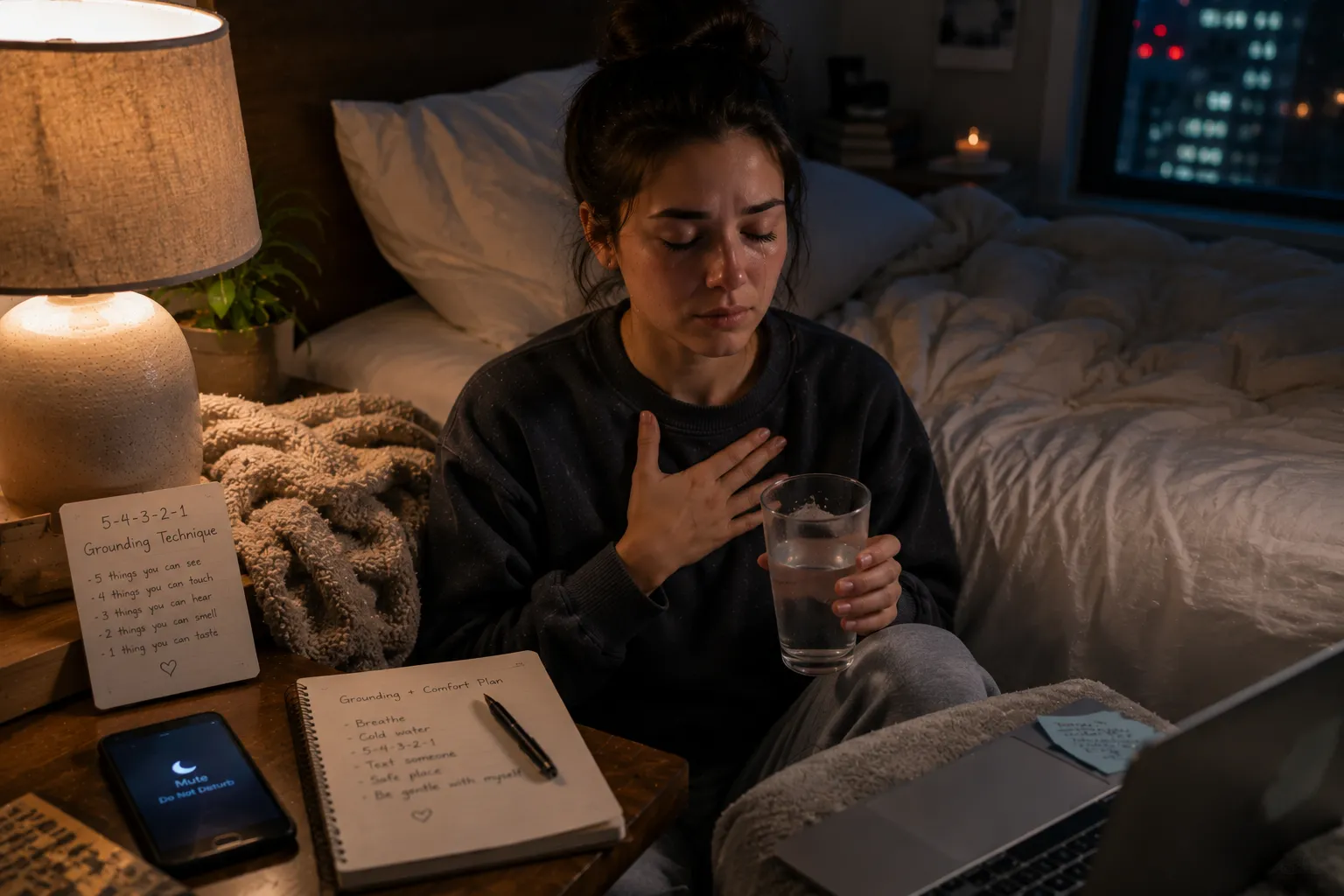
Name what is happening. Say: “This is a panic attack. It is uncomfortable, but it will pass.” Naming reduces uncertainty.
-
Sit down or lean against something stable. Give the body a physical signal of support.
-
Slow the exhale. Try inhaling for 4 counts and exhaling for 6. Do not force deep breaths if that makes you dizzy.
-
Ground through the senses. Name objects in the room, feel your feet, hold something cold, or press your palms together.
-
Stop checking. Repeatedly checking pulse, symptoms, or online explanations can keep the alarm active.
-
Choose one safe action after the peak: drink water, wash your face, call someone, or sit quietly until the body settles.
The goal is not to make panic disappear in one minute. The goal is to stop feeding the fear spiral.
What to do after a panic attack?
After panic, the body may feel exhausted, shaky, ashamed, or unreal. Treat the next hour as recovery after a strong stress response.
Drink water. Eat something simple if you can. Reduce stimulation. Avoid big decisions and self-criticism. Do not immediately analyze your entire life while the nervous system is still activated.
Write a short note:
- What was happening before the attack?
- What symptoms appeared?
- What helped even a little?
- What do I want to try next time?
This creates a personal panic plan and reduces helplessness. It also helps you notice patterns: lack of sleep, caffeine, conflict, overwork, crowded spaces, or health fears.
How to reduce the frequency of panic attacks
Panic attacks become less frightening when you understand the mechanism and stop organizing life around avoiding them.
Useful prevention steps:
- Keep sleep and meals regular.
- Reduce caffeine if it triggers body sensations.
- Practice breathing and grounding when calm, not only during panic.
- Track triggers without obsessing over them.
- Gradually return to avoided places if they are safe.
- Talk to a therapist if attacks repeat.
Seek urgent medical help if chest pain is severe, symptoms are unusual for you, or there is a risk of self-harm. Seek psychological support if panic makes you avoid life or creates constant fear of the next attack. Panic is treatable, and you do not need to face it alone.
Sources:
- Panic Disorder: When Fear Overwhelms - National Institute of Mental Health, accessed: June 7, 2026
- Panic Disorder - National Institute of Mental Health, accessed: June 7, 2026
- Anxiety Disorders - National Institute of Mental Health, accessed: June 7, 2026
Read next
Related articles that may help you go deeper
Start moving toward calm today
Therly is ready to listen and help you reflect at any time. Private, immediate, and supportive.
Try for free